

Historical research context: This article discusses earlier research and cites older sources. It is not current clinical guidance or evidence that a monitoring method is ready for clinical use.
Preventable heart disease is one of the major causes of death in the world. The World Health Organization estimates that cardiovascular disease caused 31% of all deaths in 2016, making it the number 1 cause of death globally¹. Among cardiovascular diseases, cardiac arrhythmia is one of the most common. Arrhythmia describes a set of conditions in which the heart beats too quickly, too slowly, or with an irregular pattern. Arrhythmias are responsible for up to 80% of sudden cardiac arrest cases which leads to around 12% of all deaths in a year.
Lifestyle changes can reduce the risk of some forms of cardiovascular disease, while conditions such as atrial fibrillation (AFib) can remain difficult to recognise. Researchers are investigating whether new monitoring tools can improve screening and understanding of the condition.
AFib happens when the two upper chambers of the heart (atria) don’t work in sync with the lower chambers, contracting randomly. When this happens, the lower chambers do not fill completely or pump enough blood to the lungs and body. AFib puts patients at an increased risk for stroke, death, heart failure, and dementia. But this arrhythmia often is hard to detect due to a lack of noticeable symptoms. If the AFib episodes are intermittent or infrequent, a patient might have to wear a monitoring device continuously for days or even weeks, until an event is detected.
That is why the possibility of continuously recording heart rate and rhythm via an everyday wearable, like a smartwatch, is appealing to cardiologists. It raises the possibility of non-invasive extended arrhythmia monitoring. Once linked with the smartwatch, software could detect an irregular rhythm and alert the user or even send the data to a cardiology reporting service for further analysis. Event triggers could be linked with other sensors data like GPS and gyroscopes/accelerometers to correlate symptom timing with the wearers activity.
Heart rate sensors on most smartwatches work via photoplethysmography (PPG): the technology used by conventional pulse oximeters to measure the heartbeat via monitoring color changes — and hence light absorption — at the skin surface.
There are many studies of AFib detection from electrocardiogram (ECG) signals. However, since PPG is a noninvasive technique and can be recorded on most modern devices, it shows great promise as an alternative to ECG-based solutions. Studies show that continuous monitoring with smart-device based PPG technology could be a feasible, cost-effective approach for AFib screening³. This would help efforts at screening and detection of AFib, as well as early interventions to reduce stroke and other AFib-related complications.
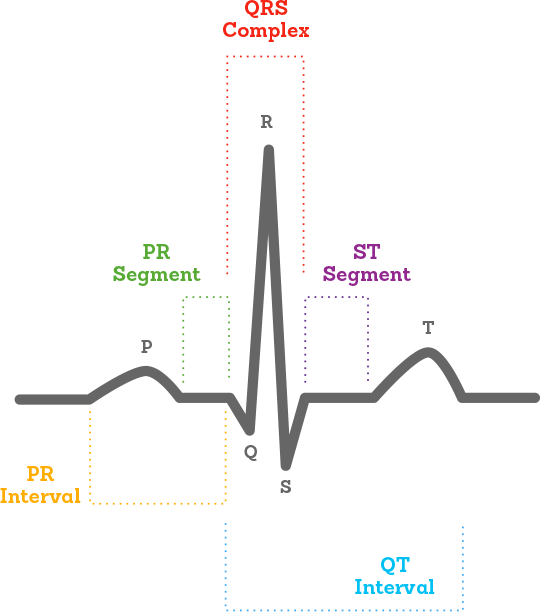
ECG (electrocardiopgrah) is a visual representation of the electric signals originating from the heart.
PPG (photoplethysmogram) uses light sensors to measure the changes in volume of the capillaries under the skin. An LED shines light against the skin; some of it is reflected and scattered back onto the photodiode; the amount that is reflected changes as the heart beats, which determines the heart rate.
But current devices are not without limitations. They need to be recharged on a daily basis, thus limiting the potential monitoring time to daylight hours only. Furthermore, changes in skin color, tattoos, temperature, erratic movement, and variations in skin pressure or even hairy wrists as well as fluctuations in oxygen levels can all affect readings via PPG⁴.
There is also the matter of privacy. The increased transfer of health information from consumers to private companies raises important questions about the ownership of such data. If such physiological information is transmitted and collected continuously, with whom would the ownership of the information reside?
Software and algorithms can support health practitioners across prevention, diagnosis, treatment, and follow-up. Machine learning may help combine information and flag patterns for review, but performance depends on representative data, clinical validation, safe integration, and human oversight. Privacy, fairness, transparency, and failure modes must be addressed before clinical use.
Over the following posts in this series, I’ll explore how to use Convolutional Neural Networks to detect AFib from ECG data; how to do it in a privacy-preserving way with Differential Privacy and Homomorphic Encryption; and how to use Computer Vision and Augmented Reality to make some of the information visible in interesting ways.
If you are evaluating AI for a sensitive healthcare workflow, Get in touch with a high-level summary of the data, validation, and operating constraints. Do not send health or other sensitive personal data through the public form.
[1] https://www.who.int/en/news-room/fact-sheets/detail/cardiovascular-diseases-%28cvds%29
[2] R. Mehra, “Global public health problem of sudden cardiac death,” Journal of electrocardiology, vol. 40, pp. S118–S122, 2007.
[3] http://www.onlinejacc.org/content/74/19/2365
[4] Scully CG, Lee J, Meyer J, Gorbach AM, Granquist-Fraser D, Mendelson Y et al. . Physiological parameter monitoring from optical recordings with a mobile phone. IEEE Trans Biomed Eng 2012;59:303–6.
Learn about our AI-First Product Development service. See how we built an AI-Powered Fetal Monitoring Solution.